By Ryder Knox | Outlaw Republic 1836
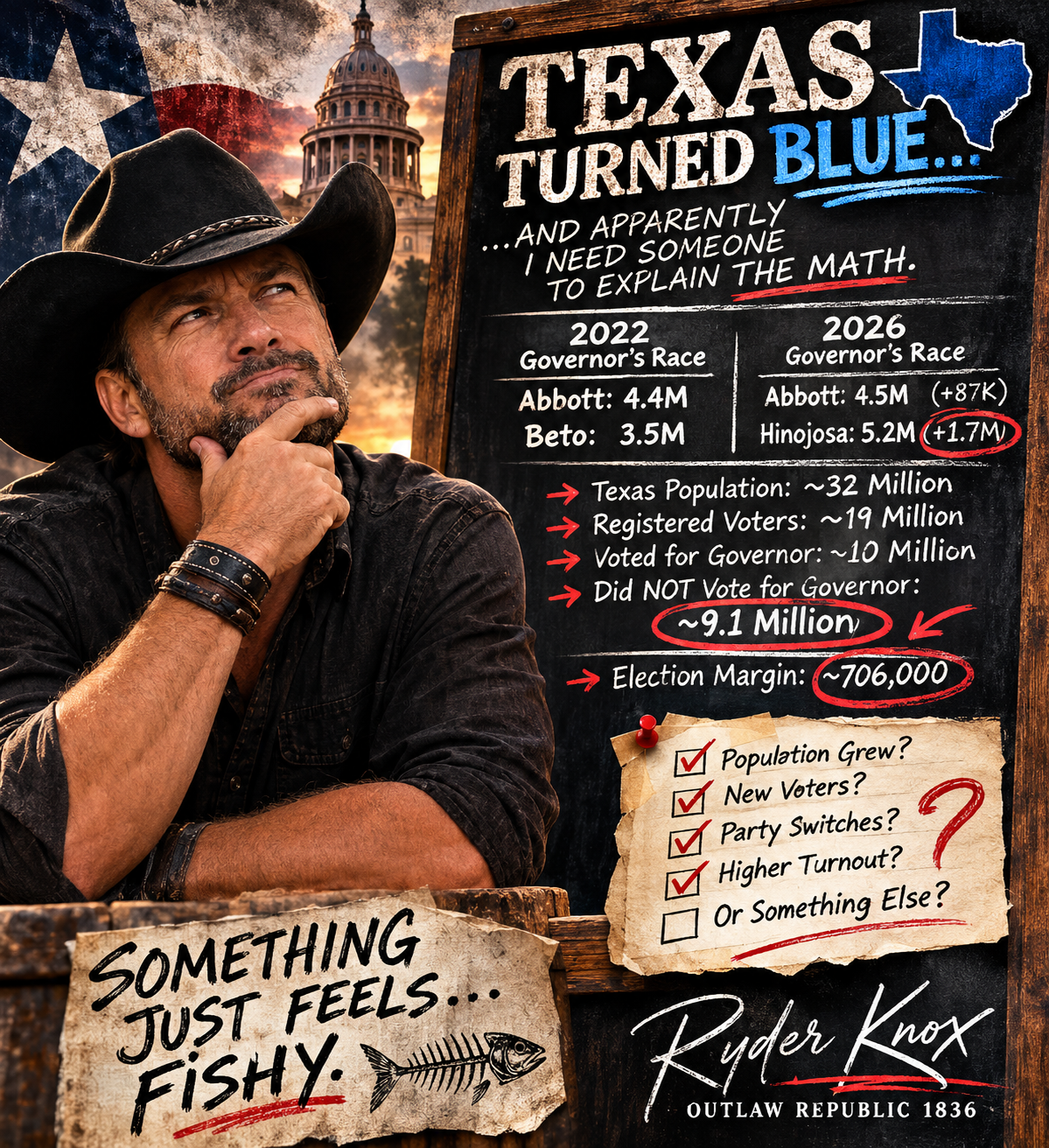
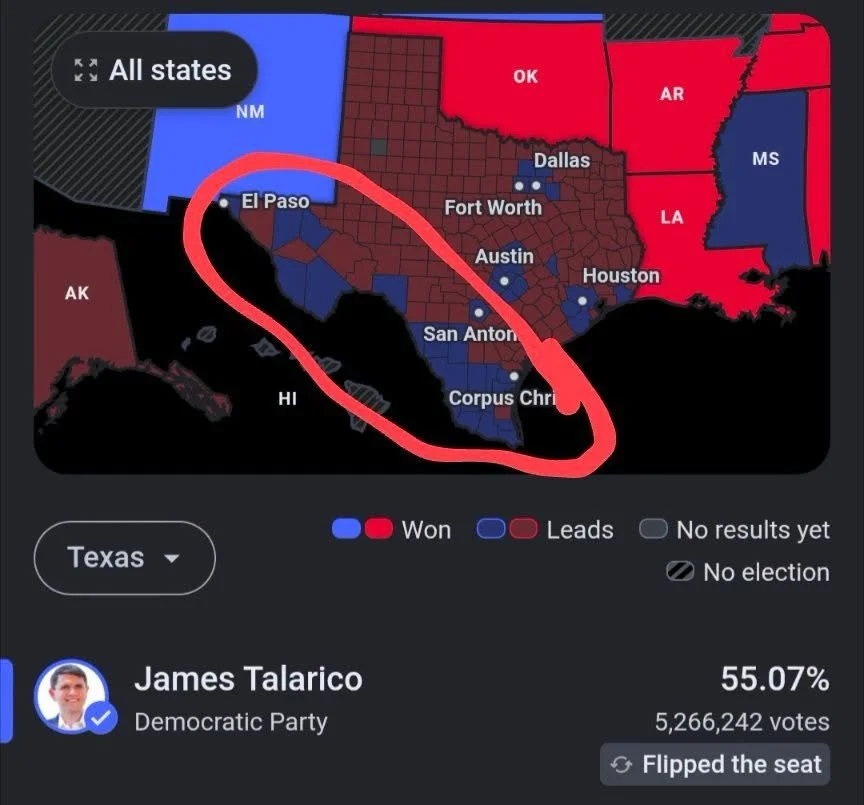
Well, Texas turned blue.
And I have to admit, I wasn't expecting that.
I've lived in Texas long enough to know that we don't change things very quickly around here. We still have people who refuse to use their turn signals because apparently that's classified information.
But somehow, we changed governors.
And not just governors. Political parties.
So naturally, I started looking at the numbers.
Which was my first mistake, because now I have questions, and apparently asking questions about elections is a great way to make everybody on Facebook angry.
Let's Talk About These Numbers
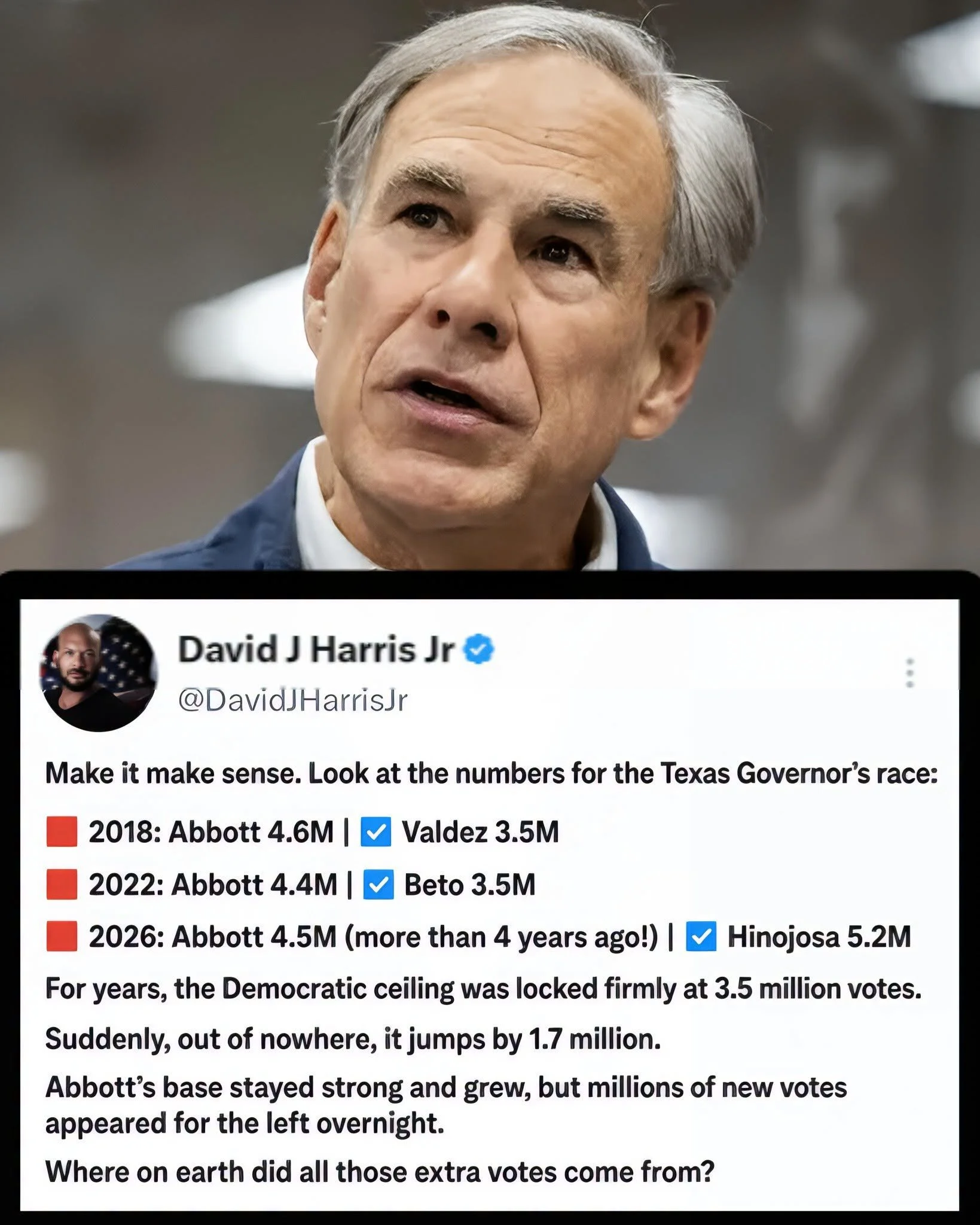
In 2022, Greg Abbott received approximately 4.4 million votes.
Beto O'Rourke received approximately 3.5 million.
Four years later, Abbott received approximately 4.5 million votes.
So he actually gained voters.
That's pretty good. Most politicians would probably be happy about that.
But Gina Hinojosa received approximately 5.2 million votes.
That's about 1.7 million more votes than Beto received.
Now, I'm not saying anything illegal happened.
I'm just saying that's a pretty impressive jump.
That's like going to bed with $3,500 in your checking account and waking up with $5,200.
I'd be thrilled.
But I would also probably check to see whether the bank accidentally deposited somebody else's paycheck.
And before somebody points out that Joe Biden received more than 5.2 million Texas votes in 2020, yes, he did.
Which means Democrats have reached that number before.
So the number itself isn't impossible.
But I would still like to know what changed between the last two governor's races.
Preferably explained by somebody who doesn't immediately start yelling. No need to yell people…..Always yelling.
Texas Has 32 Million People
Now here's where things get interesting.
Texas has approximately 32 million residents.
About 19 million were registered to vote.
And roughly 10 million cast a vote for governor.
Which means approximately 9 million registered voters didn't vote in that race.
Nine. Million.
That's not a small group of people.
That's enough people to form their own state.
They could call it Procrastination.
Their state motto could be, "We'll get around to it."
And here's the part that really caught my attention.
The governor's race was decided by approximately 706,000 votes.
Meanwhile, about 9 million registered voters didn't cast a vote for governor.
Now, before somebody starts doing math in the comments, I'm not suggesting all 9 million would have voted Republican.
They could have voted Democrat.
They could have voted Libertarian.
They could have written in Matthew McConaughey.
Honestly, this is Texas. That last one wouldn't surprise me.
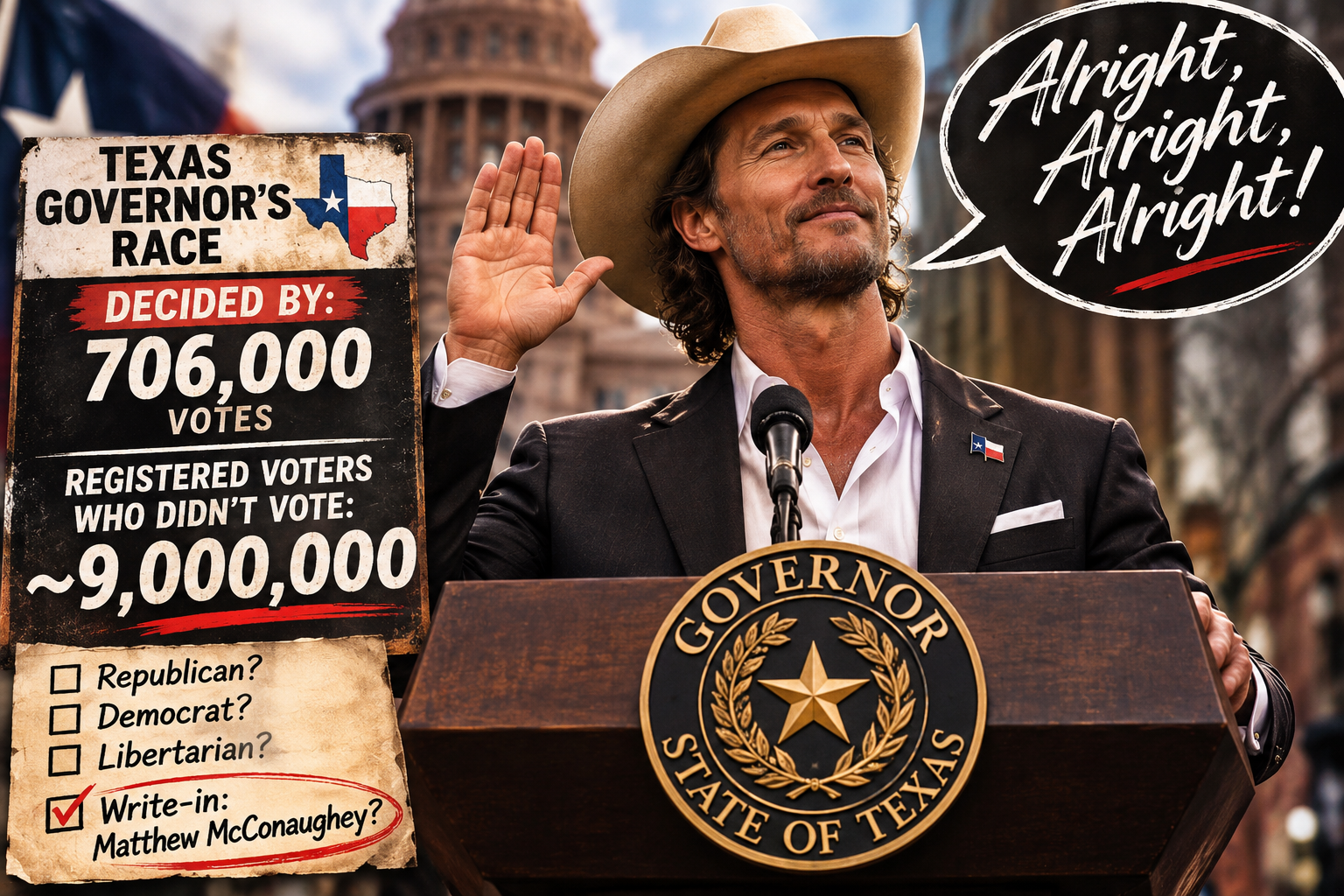
But it does make you wonder how an election involving nearly 19 million registered voters ends up being decided by a margin of about 700,000.
And apparently half the registered voters looked at the whole situation and said, "Y'all figure it out."
What About All Those New Democratic Votes?
Texas grew substantially between 2022 and 2026.
And yes, people move here.
A lot of people.
Mostly from California, judging by how much everybody complains about California.
But population growth doesn't automatically explain voting changes.
Some people move here. Some move away. Some turn 18. Some die. Some switch political parties. Some vote for the first time in years.
That's normal.
But when one party gains roughly 1.7 million votes in a governor's race while the other gains fewer than 100,000, I think it's reasonable to ask where that difference came from.
Was it increased turnout in major cities?
New voters?
People switching parties?
A different electorate than the one that voted in 2022?
Those are legitimate questions.
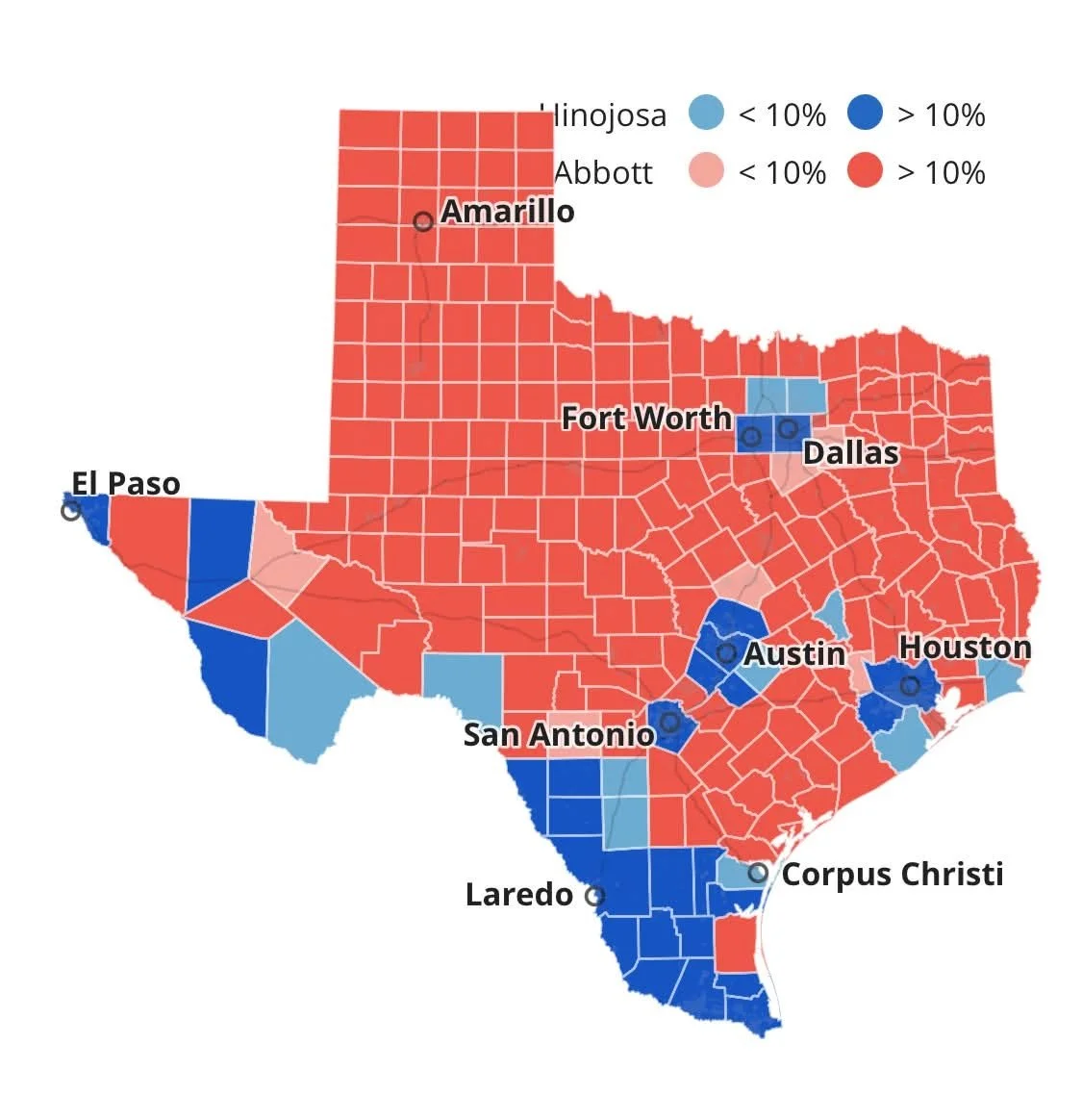
And I'd love to see the county-by-county numbers.
Because right now, everybody seems to have an explanation.
Republicans say something looks suspicious.
Democrats say everything makes perfect sense.
And I'm over here trying to figure out why a bag of groceries costs $87.
And Then There's Executive Order 13848
Now somebody sent me information about Executive Order 13848.
That's the federal executive order dealing with foreign interference in American elections.
It was signed in 2018.
Apparently, there's a framework for intelligence agencies to examine foreign election interference after federal elections.
Which is good.
I'm glad somebody is checking.
Because I can barely keep people from getting into my Netflix account, so I would certainly prefer that somebody with more qualifications than me is monitoring election security.
But here's the important distinction.
The executive order existing doesn't mean somebody interfered with this election.
That's like having a fire extinguisher in your kitchen.
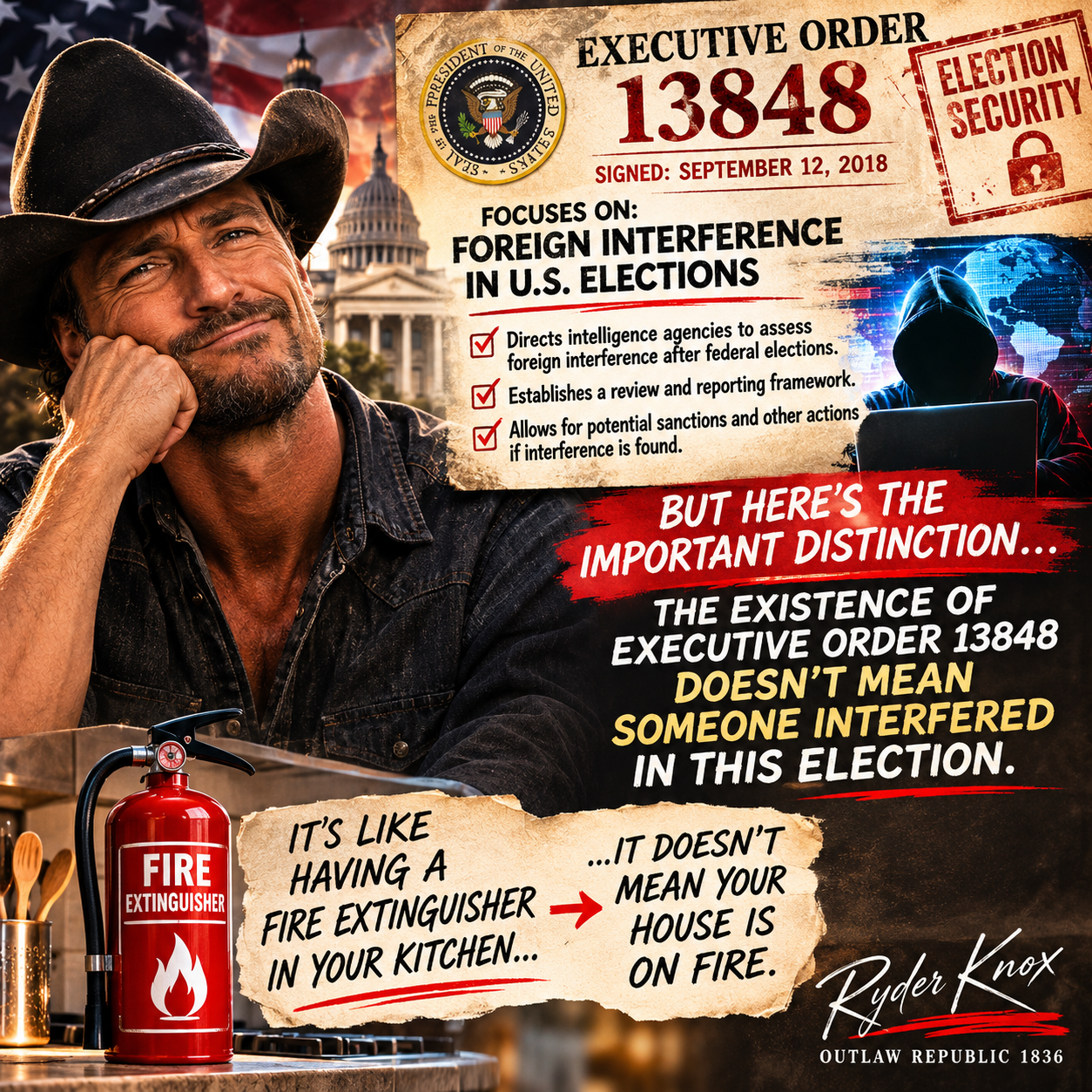
It doesn't mean your house is on fire.
Although if my cooking is involved, I'd probably keep it nearby.
If there's evidence of foreign interference, investigate it.
If there's evidence of fraudulent ballots, investigate that.
If there isn't, tell us what the records show.
I don't think that's an unreasonable expectation.
So Is Something Fishy?
Here's where I stand.
I don't know that anything illegal happened.
And I don't think a surprising election result automatically means somebody cheated.
But I also don't think asking how the voting patterns changed should be treated like you've just announced that the moon landing was filmed behind a Buc-ee's.
We have the numbers.
We have the registration records.
We have county election offices.
We have election audits.
Surely somebody can put together an explanation that doesn't require a political science degree and a three-hour argument with your uncle on Facebook.
Show us where turnout increased.
Show us how registration changed.
Show us whether the ballots and election records reconcile.
And if everything checks out, great.
That's what we should want.
Because I'm not interested in manufacturing a scandal.
I'm interested in understanding what happened.
Final Thought
Texas turned blue.
Abbott received more votes than he did four years earlier.
Democrats gained approximately 1.7 million votes compared with their previous gubernatorial candidate.
About 9 million registered voters didn't cast a vote for governor.
And the election was decided by roughly 700,000 votes.
Those numbers don't prove fraud.
But they certainly tell a story worth examining.
And if somebody can explain exactly what changed, I'd genuinely like to hear it.
Just please don't start the explanation with, "Well, obviously..."
Because I've discovered that whenever somebody starts a political conversation with "Well, obviously," we're about 30 seconds away from somebody getting blocked.
I don't need the election to turn out the way I wanted. I need to understand how it turned out the way it did.
And preferably without losing three friends, two relatives, and access to the family Thanksgiving group chat.
Ryder Knox
Outlaw Republic 1836